

Oral Cancer Survivor
Survivor offers hope to others with head and neck cancer
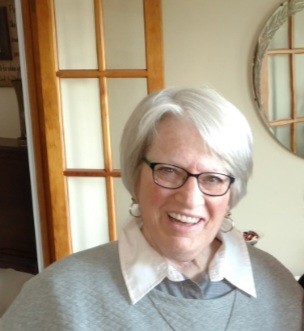
With a dentist for a father and a nurse for a mother, Betty Umoff understood at an early age the value of taking care of her health, especially dental health. So, it was ironic that she was diagnosed with Stage IV oral cancer at 69. Treatment was challenging, but she found a way to help others who are going through a similar experience. Today, she shares her story with everyone to provide support and inspire hope.
When I had a sore on my upper right gum, I asked my dental hygienist about it. She said it probably wasn’t cancer. I still had it a year later, so the dentist biopsied it. It was basal cell carcinoma.
I had no idea what to do first. Fortunately, I’ve been seeing my primary care doctor for more than 20 years and I considered him a friend. I told him about the diagnosis and he knew exactly what to do.
He referred me to a doctor who looked at me and said, “We’re going to get this taken care of. It’s going to be a long road, but we will get you fixed.” He didn’t promise a cure, but I appreciated his honesty, and it gave me hope.
Before any treatment started, I had a PET scan to determine the extent of the cancer. That’s when they found a lesion on my kidney. A biopsy showed the kidney lesion was not related to the oral cancer. Doctors recommended we remove the kidney. But they delayed that surgery because treating the oral cancer was a higher priority. I had the surgery after the treating the oral cancer.
My treatment plan was made up of different therapies, starting with a surgery called a maxillectomy. First, impressions of my mouth were taken for an obturator, which is a prosthesis that restores oral function after surgery. It covers the opening on the roof of my mouth and improves my speech and ability to chew. The surgery removed my jaw on my right side, my upper palate, hard palate and eight teeth. During surgery, they also found cancer in my lymph nodes, which meant the cancer was Stage IV. After a few days in the hospital, I was sent home with a scar from ear to ear, staples in my neck and drains. Fortunately, I did not need reconstructive surgery.
Three weeks later, I started chemotherapy and radiation therapy. I felt very fortunate that I didn’t lose my hair with chemotherapy. I lost my eyebrows and the texture of my hair changed, but that wasn’t so bad. The side effects of the radiation therapy were far worse. About two weeks into treatment, I had to have a feeding tube because I had bad mucositis, thrush and bleeding that prevented me from being able to eat, take medicine, brush my teeth or drink. After about eight months, the feeding tube was removed.
While I had the feeding tube, I would still go out with friends to restaurants. They’d pick places that don’t have servers come to the table and just place their orders and sit with me. I enjoyed socializing and the companionship without worrying about what to eat or how I looked eating. I refused to limit my life after cancer. I just live in a new reality now.
Part of my follow-up treatment included physical, occupational and speech therapy that really helped. The hospital even provided a host of supportive care options that included consultations with dietitians, massage therapists and a counselor. I was surrounded by love and support from my family and friends. When I couldn’t talk after surgery, sometimes the most important thing they did was come over and just sit with me or paint with me. I love to paint.
One of the biggest challenges with cancer is adapting to life after treatment. When you’re in treatment, you feel surrounded and protected by the medical team. After the treatment is finished, you have to manage the physical, emotional and psychological aspects of the cancer.
Although I no longer have a feeding tube, eating is still a challenge since I only have a few teeth left. I cannot bite into food, but love vegetables and pasta. I still go out with friends and I’m on a soft food diet so I can order from the menu.
Several years after my treatment ended, my oncologist asked if I was willing to talk to a few of his other patients so they could talk to someone who had experience with this type of cancer who was also positive and hopeful. I enthusiastically said yes. I am happy to share my story and provide hope. I’ve made some great friends by sharing with other head and neck cancer patients.
Don’t look at cancer as a death sentence. There is light at the end of the tunnel. You will have good days and bad days. You just have to learn how to live life a bit differently than before. You will get to know who your true friends are. When people want to help you, let them. Don’t send them away. Don’t hibernate.
I don’t think of myself as a survivor. I consider myself a thriver in “thrivorship!”
