

Liver Cancer Survivor
Look at Life Differently — And Keep Living
After multiple tests, doctors couldn’t find any medical reason to explain 45-year-old Kara Klink’s advanced liver cancer diagnosis. Rather than dwell on the cause, Kara chose to work closely with her medical team and make life changes that put her in control of her own destiny.
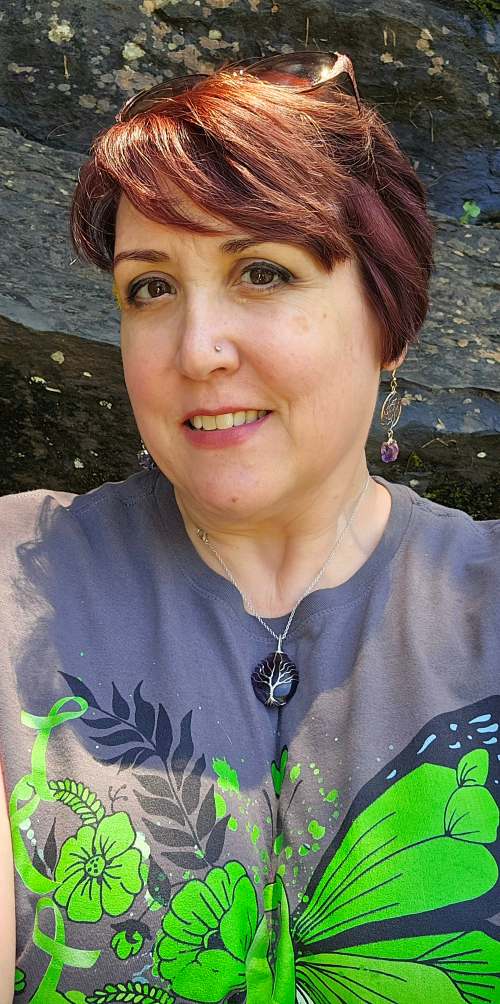
Severe abdominal pain that made it painful to breathe forced me to go to the emergency room one Friday night. I should have gone earlier, but as a dedicated oncology social worker, I wanted to wrap up things at work just in case it was something serious. It was. The ER doctor told me they had found cancer in my liver but weren’t sure if it was a primary cancer or a metastasis from a different type of cancer. Colon cancer was a possibility, but we wouldn’t know until I followed up with an oncologist.
I went home that night to my two cats that, coincidentally, I had inherited from a patient who had passed away from colon cancer.
That Monday, I was in my oncologist’s office at 8 a.m. — not for work, like I should have been, but for his opinion. He was wonderful and calming. My CT in the ER had shown nothing in my abdomen, so he suggested we start with bloodwork and a biopsy.
Test results showed primary liver cancer with possible neuroendocrine tumor (NET) development. They found more than 20 tumors, the biggest of which was the size of a grapefruit. It was not a diagnosis I would have ever expected. I didn’t have any comorbidities that would put me at risk for it.
While I waited for an appointment with a specialist, I had to move forward with treatment. I learned I was not a candidate for a liver transplant. The potential NET involvement required me to start chemotherapy as soon as possible. I was preparing to get my port when the medical team reviewed my bloodwork and told me the results were so dire that I needed to be admitted to a different hospital immediately.
There I began 44 hours of inpatient non-stop chemotherapy. I had all the side effects that you might imagine, but there was a silver lining to this otherwise awful stay. The specialist I was waiting to see was the doctor there. He and the pathologist did not feel there was NET involvement, and I was able to stop the chemotherapy and begin immunotherapy two days later.
When I shared my diagnosis with my family, friends and co-workers, I emphasized the severity of it. I wanted them to understand that my care was palliative, not curative. Mostly, I didn’t want them to be shocked if something happened. I also think it was a way of helping me avoid processing it.
I’d also made a list of people I wanted to reach out to, including my high school boyfriend, Jeff. He had been “the one” but I ended it. I wanted to tell him that I was sorry. It turned out to be one of the best decisions I made.
I trusted my doctors to manage my treatment, which allowed me to look at the whole cancer situation in a new light. At first, I wondered how my body could do this to me. I found a lot of comfort in reading about Eastern views about the liver holding pent up anger. That spoke to me, and it made me realize that my body wasn’t the enemy. My liver was telling me I could keep going as I was and I wouldn’t be here very long. Or, I could reevaluate how to make my life better, and I may be here longer. That meant I had to stop working two jobs, not eating and sleeping properly, and running on adrenaline and stress. And, I could start thinking of myself as Kara, a person who has cancer. Not “liver cancer Kara.” It’s a totally different way to look at things.
Finding support was life-changing. I have amazing friends and family, but there are things I don’t want to talk to them about because I don’t want to upset them. About a year after diagnosis, I found a Patient Resource Liver Cancer Guide when I was going for a second opinion. It was like the heavens opened up. I discovered Blue Faery: The Adrienne Wilson Liver Cancer Association, and I knew I’d finally found my people! I volunteer and share my story wherever I can. I was put on this earth to help people, and now I can again.
The immunotherapy is doing what it is supposed to do. The only side effects are fatigue and joint pain. I understand that my body can’t do what it did before, but I try to give myself a little grace. Palliative care is essential. It helps with pain and with validating my emotions.
After two years on continuous treatment, I now get the same treatment but with breaks. It’s a better quality of life for me. I’m thrilled to report my labs are all normal, and my scans have shown incredible shrinkage.
I was so happy when Jeff and I reconnected, but I never imagined we’d get back together. He surprised me with an engagement ring on the anniversary of my diagnosis. It’s a day I celebrate because it has led me to where I am today, and now it is even more special.
