

Small Cell Lung Cancer
Introduction
Receiving a small cell lung cancer (SCLC) diagnosis may feel life-changing. It can be easy to feel lost in the complicated medical terms, new doctors and a changed vision of your future. But you are not alone. You will be surrounded by a multidisciplinary team of skilled health care professionals. They know it is difficult to process a SCLC diagnosis, and they are prepared to support and guide you so that you feel empowered to make the best treatment decisions for you.
You may have been diagnosed by your primary care physician or a local oncologist, but the first step to empowering yourself is knowing that you are the decision maker for your care. One of your first decisions will be to choose a treatment team. Look for these qualities:
- Accredited hospitals, cancer centers and doctors with expertise in treating SCLC.
- A doctor who is a good listener. Pick a doctor who will listen to your concerns so that you feel comfortable asking hard questions and making difficult decisions. You want to feel you can trust this person and that your interests are being considered.
- A doctor and/or care team who are compassionate and able to explain complex medical language so you can understand it. Knowledge is power, and understanding the choices you are facing is critical to making treatment decisions.
How the Lungs Work
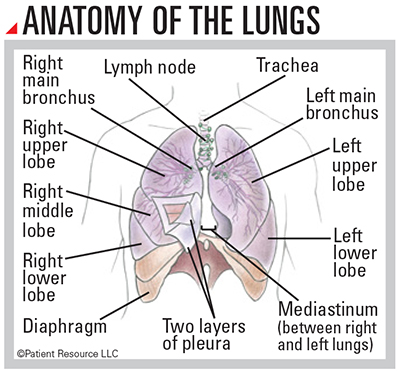
The lungs are a pair of large, spongy, expandable organs in your chest cavity that are surrounded by a thin layer of protective tissue (pleura). The right lung is a little larger with three parts (lobes), and the smaller left lung has two lobes (see Anatomy of the Lungs).
Your lungs expand and contract when you breathe, exchanging oxygen and carbon dioxide. When you inhale, your lungs fill with oxygen-rich air, which is delivered to red blood cells that then deliver the oxygen to the rest of your body. When you exhale, the carbon dioxide that is brought back to the lungs by red blood cells is expelled into the air. Your diaphragm, a dome-shaped muscle underneath your lungs, initiates this cycle of expansion and contraction.
Understanding Lung Cancer
Lung cancer is more complicated than many people realize. There are different types, and they fall into two main classifications: small cell lung cancer (SCLC) and non-small cell lung cancer (NSCLC). NSCLC makes up the majority of lung cancer diagnoses and has several subtypes. Other less common types of cancer that may affect the lungs but are not considered lung cancer include mesothelioma and sarcoma of the lung. This guide focuses on SCLC.
SCLC is an uncommon form of lung cancer. It is named for its appearance under a microscope. Although it has traditionally been very challenging to treat, new drugs, treatment strategies and clinical trials are making great strides in how SCLC is treated and managed. The result is more options, and more hope, for people facing this aggressive lung cancer.
Cancer develops when abnormal cells in the lining of the airways accumulate to form a tissue mass (primary tumor). SCLC often starts in the central airways (bronchi) in the center of the chest and frequently spreads to distant parts of the body before it is found. In advanced disease, lung cancer cells break away to form tumors (metastases) in the opposite lung and in distant sites such as the liver, brain or bones. Even though they are in other parts of the body, they are still considered lung cancer and are treated as such.
Moving Forward
Many people feel they’ve lost control of their lives after they find out they have cancer. But there are several things you can control, and it’s important to embrace them right from the beginning. For the most part, you can control what you eat and drink, how often you exercise and rest, and your attitude. If you have trouble eating or maintaining your weight, you can be referred to a dietitian. Other ideas to keep in mind include the following:
- Continue to set goals, plan special events and live your best life possible. Find the things that bring you joy and happiness.
- Be a student of the disease, and learn all you can about it.
- Stay hopeful. New therapies are available to treat SCLC, and research is looking for more options every day.
- Find support.
Meet Your Health Care Team
Become an active member of your health care team because you will be working closely with them. Think of your relationships with them as a collaboration. Learn all you can from them and the resources in this guide. Being informed will increase your confidence. You may have several specialists on your team. Get to know them and find out how to contact them. They may include:
- Medical oncologists
- Surgical oncologists
- Radiation oncologists and radiologists
- Thoracic radiologists and surgeons
- Pulmonologists
- Oncology nurses
- Advanced practice providers (oncology nurse practitioners and physician assistants)
- Nurse navigators
- Case managers, social workers and patient advocates
- Rehabilitation specialists including physical, occupational and speech therapists
- Respiratory therapists
- Pharmacists
- Financial counselors
- Geriatric specialists
