

Small Cell Lung Cancer
Survivorship
Focusing on survivorship requires a certain mindset. Although your day-to-day schedule will be filled with medical appointments, treatments and other illness-related commitments, it is important to realize that small cell lung cancer (SCLC) does not have to consume your whole life. You can still live a happy and rich life. It just takes a plan.
Cancer survivorship means different things to different people. Some people consider themselves survivors right after diagnosis; to others, it is after they finish primary treatment or begin maintenance therapy. Regardless of how you define it, you are encouraged to talk about it with your doctor. Together, you will develop a plan that will serve as a roadmap for the future.
A survivorship plan starts with your medical information. It is a comprehensive record of your medical history, diagnosis and treatment plan, including ongoing medications. It is also a schedule of follow-up appointments, which are essential for monitoring treatment effectiveness and staying alert to the possible spread of cancer or onset of other health issues.
The rest of the plan identifies other priorities that will help you lead a healthy, well-balanced lifestyle.
Daily Activities
The things you are used to doing every day, such as cooking, folding laundry or walking to the mailbox, may suddenly be more difficult. Continue to do them but take breaks when you feel your energy waning. Talk with an occupational therapist on your health care team about smarter ways to accomplish your daily activities. Give yourself some grace. Remember that you do not have to do everything exactly how you did it before, or all on your own. Accept help from friends who offer, and ask for help when you need it.
Exercise
Although you may not have the lung capacity or the energy you used to, being active is still extremely important. It gives you more energy, reduces fatigue and helps relieve constipation. And, it is a general mood-lifter. Knowing that the type of exercise you can do now may be different than what you used to do, set goals you can work up to:
- Avoid inactivity. Get moving, whether it is walking to the mailbox or around the house.
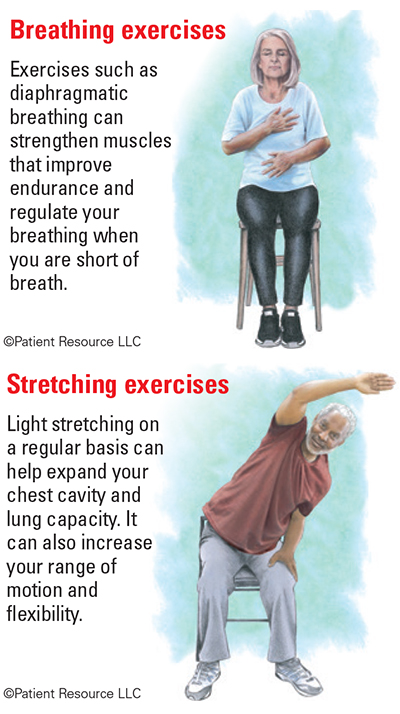
- Perform breathing exercises regularly. They can strengthen chest and abdominal muscles used for breathing adn reduce shortness of breath (dyspnea).
- Warm up before exercising. Stretching increases blood flow and oxygen to the muscles and, in turn, increases your lung capacity. It also extends your flexibility and range of motion, and reduces stiffness.
- Regain muscle mass. Strength training can fortify muscles weakened by treatment and improve your balance and posture. It can also increase your bone strength, which is especially important if cancer has metastasized to your bones.
- Get your heart pumping. Aerobic exercise, such as dancing, swimming and biking, offers great cardiovascular benefits.
Breathing Aids
You may need additional oxygen when you feel short of breath or while you are exerting yourself. Make sure your caregiver understands how to use your oxygen equipment and how to hook up a supplemental tank, especially in case of a power outage. Your doctor may also provide you with an incentive spirometer or another type of equipment to strengthen your lung capacity.
Sleep Hygiene
Your body needs proper rest to tolerate treatment and to heal. It is common, however, to occasionally have trouble falling and staying asleep or be excessively sleepy. The following may help prevent ongoing sleep issues:
- Set a routine for sleeping and waking.
- Go to bed at the same time and wake up at the same time daily.
- Limit daytime napping to 20 to 30 minutes, and avoid napping in the late afternoon or early evening.
- Avoid exercising within two hours of bedtime.
- Limit caffeine and alcohol too close to bedtime. Keep in mind that although alcohol may make you sleepy at first, it may disrupt your sleep.
- Drink warm milk or herbal tea.
- Only use your bed for sleeping, not for watching television, using your computer, talking on the phone, reading or eating.
- Create a restful bedroom. Turn off or dim the lights, eliminate noise, set a comfortable temperature and keep your bedding and pillows clean.
If your sleep issues continue for more than a few days, tell your health care team so they can help you manage them right away. Also, talk with them before taking over-the-counter sleep aids to ensure they don’t interact with your medications.
Exercises for People with Small Cell Lung Cancer
Spirituality
Having faith can help you manage the emotions and struggles that accompany a serious illness. Where you find your faith is up to you. It may stem from religion, spirituality or anything that brings you joy. Yoga, meditation, journaling or other forms of creative expression are all ways to find comfort. Keep looking until you find something that brings you peace.
Travel
If vacationing is a big part of your life, keep it up. Whether you take a weekend trip or spend a few weeks away, traveling offers many physical and emotional benefits. You just have to plan well:
Make your plans around your medical appointments and treatments.
Prepare for possibly needing medical care while you are away. Take a copy of your Survivorship Plan, as it has all the details of your medical status and your health care team’s contact information.
Organize activities that match your energy level. Take a cane or walker and oxygen to make it easier on you.
If you plan to fly, contact the airline before you go about how to properly travel with oxygen.
Sexual Health
Cancer and its treatment can affect how you feel about yourself sexually. Talk with your doctor early to find out what to expect in terms of sexuality issues, from potential side effects to your ability to have an active sex life. Talking with your partner, a therapist or a trusted friend may help you work through any challenges.
Tobacco Use
Even after a SCLC diagnosis, you will benefit from stopping smoking and using any form of tobacco. Quitting is challenging, and it is easier when you have support. Refer to the resources on page 7 or ask a member of your health care team to help you. Counseling makes it easier to stay away from tobacco.
Nutrition
Maintaining your weight is essential for keeping up your energy and making your treatment most effective. The different and sometimes metallic way food tastes and not having much of an appetite can make it challenging. Meet with the nutritionist on your health care team. Together, you can develop a meal plan that includes foods you like along with nutrients you need. Check into meal delivery services that promote nutritious and easy-to-make meals. And make sure you are drinking 8 to 10 glasses of water a day to prevent dehydration, which can worsen some side effect symptoms.
Support
Surrounding yourself with people you can rely on, confide in and, most importantly, who understand what you are going through will help you immeasurably. Use the resources in the back of this guide to connect with the lung cancer community and learn from the wisdom of others who have been touched by lung cancer. Many offer online, phone or in-person support options, so you can find one that is most comfortable for you.
If your doctor does not bring up a survivorship plan first, ask about it.
Get involved with the Lung Cancer Community to help bring more awareness to SCLC
- World Lung Cancer Day is always on August 1
- November is Lung Cancer Awareness Month
