

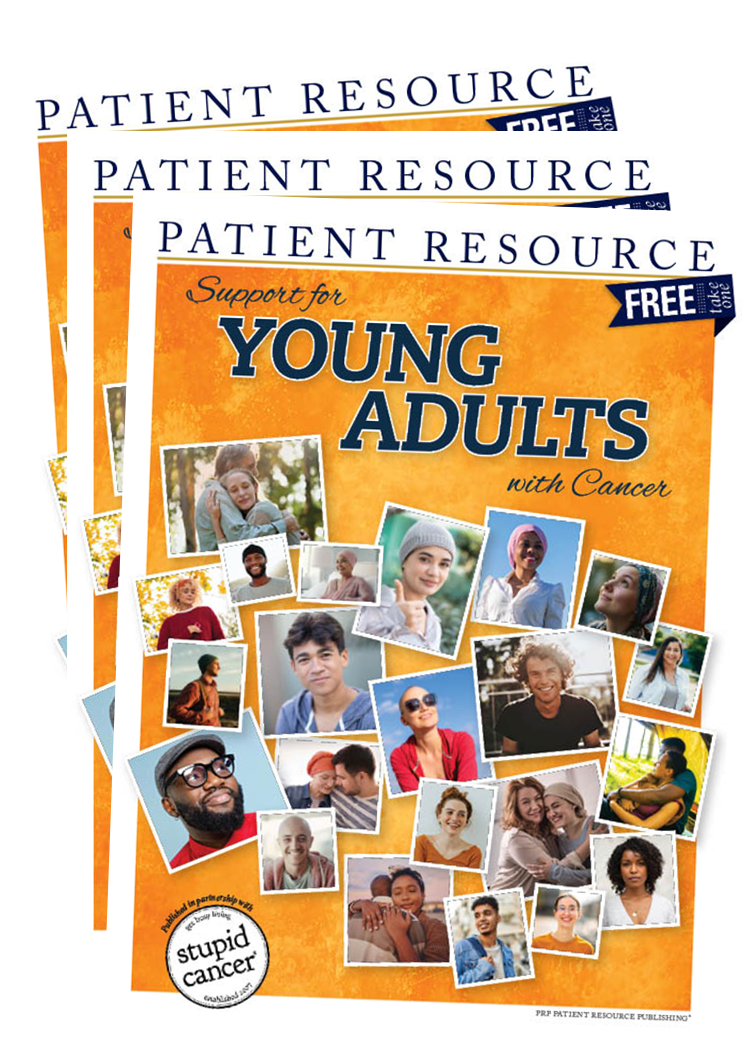
Support for Young Adults with Cancer
Mental Health
Even though there is never a good time to have cancer, you may feel that it’s especially unfair to have it now. Why did it have to happen just when you’re coming into your own as a young adult? Even more important, why is it happening to you? The roller coaster of emotions you’re on is normal. To make sure it doesn’t interfere with your ability to receive care and your life overall, it is critical that your treatment plan includes mental health resources to support you from diagnosis through survivorship.

Research has shown that the mental and emotional impact of a cancer diagnosis on young adults can have short- and long-term effects because the diagnosis itself can have a ripple effect. Missing out on academic and career opportunities, getting married, having a family, buying a house and other milestones also means missing out on some important developmental stages of your life. When you are not able to form the important social, emotional and adaptive coping skills that go along with these milestone events, you may be less equipped to handle the additional emotional load of the cancer experience.
Mental health issues don’t always stop after treatment ends. Emotions can come up months and years later. Your mental health is as important as your physical health.
Most Common Emotional Struggles
Young adults with cancer struggle with anxiety, depression, loneliness and isolation, anger, distress and fear. Left unaddressed, these mental health issues can make it challenging to follow treatment or keep medical appointments. If these issues continue long term, they could suppress the immune system, Young adults with cancer struggle with anxiety, depression, loneliness and isolation, anger, distress and fear. Left unaddressed, these mental health issues can make it challenging to follow treatment or keep medical appointments. If these issues continue long term, they could suppress the immune system, decreasing the body’s ability to fight infection and increase the risk for serious illness like heart disease and stroke. As a result, it is important to know what to watch for.
Stress and anxiety. You may feel anxious about your diagnosis, treatment and long-term survival. Waiting for test results during follow-up appointments and scans can raise anxiety levels (scanxiety).
Isolation. You may feel like you are the only one your age with cancer or that no one understands what you’re going through, which increases feelings of loneliness and isolation. You may feel down when you see friends achieving the milestones you would have if it were not for cancer. Surprisingly, transitioning out of active care into survivorship can be a particularly lonely time. Adjusting to less frequent appointments may feel scary simply because you are not surrounded by as many people as you have been.
Distress. Any type of emotional, social, spiritual or physical pain and suffering may cause you to feel sad, afraid, depressed, anxious or lonely. Distress is most likely to occur during diagnosis, when a new symptom arises or the cancer has returned. It can also happen while waiting for treatment to start Distress. Any type of emotional, social, spiritual or physical pain and suffering may cause you to feel sad, afraid, depressed, anxious or lonely. Distress is most likely to occur during diagnosis, when a new symptom arises or the cancer has returned. It can also happen while waiting for treatment to start or when symptoms worsen. People who consider themselves to be in a racial or social group may feel different types of stress. It is important for them to connect with community resources to help them overcome any perceived socio-economic factors.
Serious Mental Health Issues
Sometimes negative feelings can advance to depression, anxiety disorders (generalized anxiety disorder, obsessive compulsive disorder and panic disorder), post-traumatic stress (PTS) and post-traumatic stress disorder (PTSD). Below are general symptoms to help tell them apart, but don’t diagnose yourself. Meet with your doctor to be sure.
Depression is characterized as ongoing sadness and/or loss of interest in activities. The following are signs of depression that may indicate you need to seek mental health support right away:
- Prolonged feelings of sadness and/or anxiety
- Lack of interest in activities you once enjoyed
- Difficulty doing daily tasks
- Irritability
- Low energy levels
- Changes in sleep or eating habits
- Difficulty concentrating
- Increased use of drugs or alcohol
- Thoughts of harming yourself or suicide
If you or a loved one is experiencing a mental health crisis, dial 988 to talk to a trained mental health professional. It is free, confidential and always available. For the Crisis Text Line, text HOME to 741741.
Anxiety disorders are different than everyday worries. They may lead to intrusive thoughts that result in persistent anxiety. Symptoms include excessive worry and nervousness, mood swings and physical symptoms such as heart palpitations, sweating and shortness of breath. Treating an anxiety disorder may improve your ability to cope with your diagnosis.
Post-traumatic stress (PTS) and post-traumatic stress disorder (PTSD) reactions may include repeated frightening thoughts, being distracted or overexcited, having trouble sleeping and/or feeling detached from yourself or reality. PTS can occur at any point during the cancer journey. In some cases, PTS can lead to PTSD, which is often more severe and can last longer than PTS. Cancer survivors with PTS need early treatment that uses similar treatment methods as those used to treat trauma victims. Because depression, anxiety, PTS and PTSD can show up at any time, young adult cancer survivors and their families need long-term monitoring for PTS and PTSD. Symptoms may include avoiding medical appointments, blaming yourself for the illness, experiencing survivor’s guilt, and having difficulty sleeping and/or concentrating.
Your Support Team
The young adult cancer community is there for you 24/7. It is made up of health care professionals, including social workers who can help you cope with life challenges, psychologists who are experts in how people think, feel and behave, psychiatrists who are licensed medical doctors who specialize in mental health, oncology nurses who are trained to help people with cancer, and many others. Even though you may not need help from all of these professionals right now, it is helpful to know they’re available. You may benefit from continuous psychological support even after treatment ends.
Many support groups for young adults are available online, through social media, by phone and in person. Some advocacy groups specialize in helping young adults with cancer. They can connect you with helpful resources and may be able to introduce you to another survivor who has a similar diagnosis. Being able to talk to another young adult with cancer in person or online can help relieve feelings of loneliness, isolation and anxiety. And, sometimes, you just need someone else to help you find the hope that you will survive and that a life worth living after cancer is possible.
Challenges to Finding Resources
Despite the need for mental health services, young adults with cancer may be reluctant to, or face barriers to, getting the help they need. Or, they may not recognize their symptoms are indicators of emotional distress. Social norms and gender roles may prevent them from exploring resources, and the risks of rejection and stigma may stifle the desire to ask for help. Can you relate to those, or are you experiencing any of the following?
- Struggling to acknowledge the emotional impact of the diagnosis and, instead, coping by stuffing the feelings down.
- Having difficulty admitting you need help, asking for help or accessing help.
- Wanting to avoid facing painful emotions.
- Not wanting to talk about cancer at all to distract yourself from thinking about it.
- Having trouble expressing difficult emotions especially because you don’t want to burden friends or family.
- Fearing that sharing your feelings will cause friends and family to pull away from your relationship.
- Not believing that talking about feelings can even be helpful, regardless whether it’s to other survivors or mental health professionals.
- Wanting to focus on “just getting through treatment.”
- Having physical symptoms that you assume are only physical side effects. Cancer and mental health problems often present with the same symptoms, making it difficult to distinguish between them, including fatigue, nausea, decreased appetite, cognitive (thinking) changes and sleep problems.
These are all valid feelings; however, young people who have sought mental and emotional support during or after cancer treatment have found it helped. Some say it felt like it lifted a weight from their shoulders and made it easier to manage their everyday anxiety. Let your health care team know as soon as you experience any symptoms. Don’t be embarrassed to speak up and share your feelings with them. The sooner your team knows, the sooner they can help.
Strategies for Success
Try these methods for improving your mental health:
- Increase your self-awareness. Find out what triggers you, such as certain people, calendar dates, treatment ending, seasons, etc.
- Treat feelings as a visitor. Don’t fight them; acknowledge them and move forward.
- Treat yourself with compassion. Notice when you are in distress, show yourself kindness, remind yourself that it is ok to feel distress, and remember that being imperfect is part of being human.
- Pay attention to the present. Try practicing mindfulness, which is a practice of noting the present moment or an emotion for what it is without feeling the need to change how you are feeling or push the emotion away.
- Take good care of yourself.
It’s okay to not be okay. And, with the strong cancer community, you are never alone.
Get a handle on testing anxiety
Having follow-up exams, laboratory testing and imaging scans may bring up feelings of anxiety, sometimes referred to as scanxiety. The feeling is understandable because the results will indicate whether the treatment is working the way it is intended. Anxiety may begin as the appointment nears and stay that way until the results are revealed. That is a lot of stress to put on your mind and body.
Consider these strategies for managing the stress:
- Set expectations with your doctor or nurse about when and how you will receive the results so you are not left waiting and wondering.
- Recognize and accept that it is normal to feel this way. Consider discussing your fears with your friends, a support group or a therapist.
- Keep your mind occupied with things you enjoy, such as reading, playing games or hanging out with friends. Staying busy gives you less time to worry.
- Try to calm your nerves with meditation or deep breathing.
Use the Patient Portal
Keeping the lines of communication open will be critical during and after treatment. Make sure you sign up for your provider’s patient portal, which is an easy way for you and your health care team to communicate outside of an office visit. It is convenient and helps you stay informed and involved in managing your health.
