

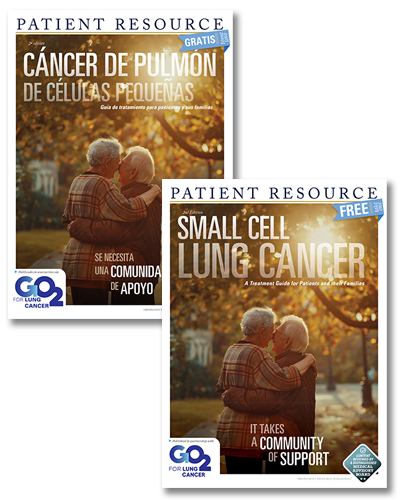
Small Cell Lung Cancer
Finding Community
Having support throughout treatment for small cell lung cancer (SCLC) makes a significant difference in your emotional and physical health. It can prevent feelings of being isolated, disconnected and lonely. Staying positive can impact your overall outlook, how well you accept your diagnosis and your willingness to stay on track with treatment. This makes finding support vitally important after diagnosis. Fortunately, there is a close-knit cancer community all around you that can help.
Welcome to the cancer community — one you never wanted to join, but it is full of support. This group of survivors, families, health care professionals and advocates may have walked in your shoes or are skilled at helping you navigate this new phase of your life. In their own ways, they can provide you with a wealth of information and support. Interact with them as much as you can, and learn from their experiences.
These supporters are passionate about helping you succeed. Read on to learn who is in this new circle of friends and professionals and how they can assist you. Keep in mind that although you didn’t ask to be part of this community – your invitation came in the form of a cancer diagnosis – the health care professionals and advocates all made conscious decisions to help people whose lives are affected by cancer. They are here for you.
Support can come in a variety of forms, enabling you to choose what is most comfortable for you. Start by asking your health care team for recommendations.
Case Managers
Many hospitals and medical centers have case managers, also called patient advocates, to help you with questions and issues related to your cancer care (see Case Management, page 4). Managing a serious illness involves much coordination, such as filing insurance claims, paying medical bills and arranging for transportation. It is difficult to address these items when you are more concerned with understanding your diagnosis and making treatment decisions. A case manager can connect you with financial experts who are skilled in planning for and managing the cost of cancer care. They can also assist with insurance enrollment, communication and benefits.
Case managers can also help you find the support you may need in your community. For example, they may work to arrange supplemental oxygen or other necessary equipment, transportation or meals. If those resources are not available nearby, they will locate them at the state and national levels.
Caregivers
A caregiver assists you with daily living tasks that you may not be able to perform for yourself, such as going to medical appointments, bathing, getting dressed and eating. You may also need help with other things, such as shopping, cooking meals and running errands.
Consider building a team of caregivers instead of relying on only one person. Start with your family and friends, but be prepared to go outside this inner circle into your community to find the assistance you need. Many cities have local volunteers who help others near where they live or work. You might also need to hire your caregivers. Hospitals and homecare agencies can provide skilled nursing care or arrange for someone to stay with you when family and friends cannot.
Support Groups
Whether they are online or in person, support groups offer you the chance to talk with others who are facing the same challenges and share knowledge about your cancer. Many advocacy groups offer peer-to-peer support through programs that match the patient with a person who has had a similar diagnosis. Being able to talk with someone who knows what you’re going through is extremely helpful.
Ask your nurse navigator, case manager or patient advocate for a referral.
Your Inner Circle
Draw strength from the relationships you already have. Now is the time to reach out to your family, spiritual community, neighbors or any other group that gives you comfort.
Mental Health Professionals
Cancer can affect you emotionally as well as physically. Taking care of your emotional well-being will help you better cope with cancer-related issues, including managing physical side effects. Supportive care services can connect you with resources to help you work through your feelings. You can begin by asking your medical team for referrals or recommendations. Consider contacting advocacy and non-profit support groups.
GO2 For Lung Cancer
One-on-one support, educational materials, guidance on treatment and clinical trial information, referrals and more are available from GO2 for Lung Cancer. Following are some of their valuable services:
- Lung Cancer HelpLine at 800-298-2436 or [email protected]
- Small Cell Lung Cancer program provides vital support, education, community connection and updates on the latest treatment advances
- Phone Buddy, a peer-to-peer support program
- GO2 for Lung Cancer LungMatch program, an on-demand treatment navigation and clinical trial matching resource
- No-cost educational materials
- Glossary or lung cancer-related terms
- Questions to ask your health care team
- A video library
- Online support resources
Your new community will always be there for you. With so many resources, you should never have to go through this alone.
