


Cervical Cancer
Supportive Care
Many women with cervical cancer fear the possible side effects of treatment. Fortunately, the advances in treatment strategies also include ways to prevent and minimize those side effects. As a result, you have access to services that are designed to help improve your overall well-being before, during and after treatment. These services are known as supportive care, and these valuable resources are available from diagnosis through survivorship.
Physical Side Effects
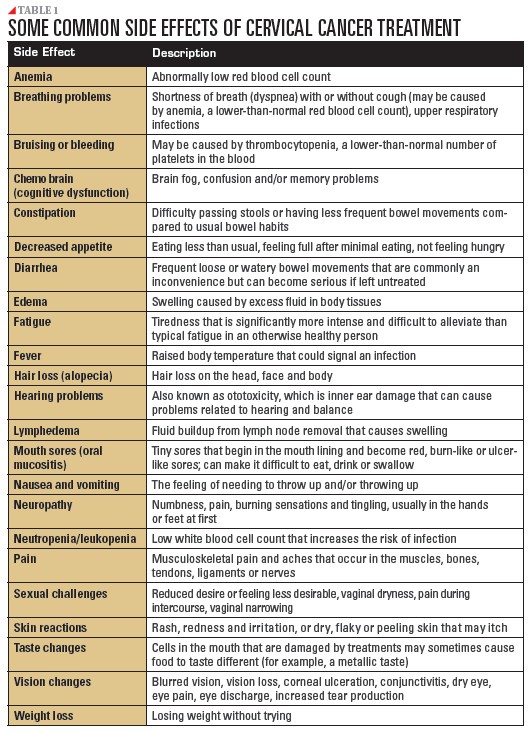
Most cervical cancer treatments have physical side effects. How you respond to those side effects will depend on many factors, including your specific diagnosis, health history, age and other characteristics. Keep in mind that some may be managed or even prevented (see Table 1).
Others, however, may be severe. As you discuss treatment options with your doctor, ask about the potential side effects of each so you can feel better prepared.
After treatment begins, your health care team will rely on you to communicate openly about how you feel. Ask about the symptoms to watch for and what you should do if they occur. Some may require alerting the health care team as soon as symptoms begin. Prompt treatment may help prevent more serious complications.
Potentially Severe Side Effects
Drug therapies used for treating cervical cancer are powerful. Some can cause side effects that are serious and potentially life-threatening. If any of your therapies have the potential to cause a severe side effect, it is critical that you understand what to watch for before treatment begins.
Not all potentially severe side effects are ones you can recognize. Some are only identifiable on lab work and imaging results and can be detected early during routine laboratory and imaging tests even before you can feel symptoms. It is crucial to stay on schedule with your follow-up appointments for monitoring. Some potentially severe side effects include the following.
Infection can occur as a result of a low white blood cell count (neutropenia/leukopenia) or other factors. Contact your doctor immediately – do not wait until the next day – if you have any of these symptoms: oral temperature over 100.4°F, chills or sweating; body aches, chills and fatigue with or without fever; coughing, shortness of breath or painful breathing; abdominal pain; sore throat; mouth sores; painful, swollen or reddened skin; pus or drainage from an open cut or sore; pain or burning during urination; pain or sores around the anus; or vaginal discharge or itching.
Infusion-related reactions occur with drug therapies that are given intravenously (IV) through a vein in your arm or through a port, usually soon after exposure to the drug. Reactions are generally mild, such as itching, rash or fever. Other symptoms, such as shaking, chills, low blood pressure, dizziness, throat tightness, skin rash or flushing, breathing difficulties and irregular heartbeat, can be serious or even fatal without medical intervention.
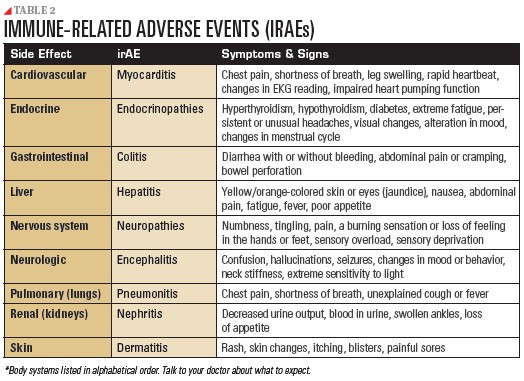
Immune-related adverse events (irAEs) are associated with certain immunotherapy drugs. Some irAEs can develop rapidly, becoming severe and even life-threatening without swift medical attention. They can occur if the immune system becomes overstimulated by treatment and causes inflammation in one or more organs or systems in the body (see Table 2).
Contact your medical team if symptoms arise between appointments. Remain alert to the possibility of irAEs for up to two years after completing immunotherapy.
Managing Emotional & Sexual Health Concerns
Cervical cancer may challenge you emotionally as much as it does physically. Don’t pressure yourself to feel a certain way. How you react to your diagnosis and treatment will be unique. Allow yourself to nurture your well-being and express your feelings freely. Being emotionally healthy will help you better cope with cancer-related issues, including managing side effects.
Many women struggle with anger, anxiety, depression, embarrassment, fear, grief and more. The physical changes from treatment can impact your self-esteem, body image and desirability. All of these feelings are completely normal, and you must address them for the sake of your emotional health. Contact your doctor about excessive crying or continued feelings of hopelessness or despair. Get immediate medical attention for thoughts of suicide or death.
Prepare for changes to your sexual health. You may face post-treatment sexual difficulties, such as a decreased sex drive, vaginal dryness, the inability to achieve or maintain arousal, pain during intercourse, the delay or absence of orgasm or feeling less desirable. A variety of products, such as vaginal dilators, lubricants and moisturizers, and resources, such as a referral for pelvic floor rehabilitation, can offer relief.
The changes in your sexual health can also affect intimacy with your partner. Open communication will be very important. Tell your partner how you feel, and allow your partner to do the same. Explore ways to be intimate other than intercourse.
Be sure to ask your doctor when it is safe to have sexual intercourse after treatment. Talking about your sexual health and intimacy concerns with your doctor or nurse is crucial, and you should not be embarrassed to bring them up. Your sexual health is a vital part of life.
Preserving Fertility
Certain treatments can affect your ability to start or maintain a pregnancy. The effects may be temporary or permanent. If you are premenopausal and are concerned about your ability to have a child in the future, be proactive about exploring fertility preservation before beginning treatment.
Following are some fertility preservation options. Be sure to check into your insurance coverage.
- Egg freezing involves having your eggs collected, frozen and stored for use later. They are not fertilized.
- Embryo freezing involves having your eggs collected, fertilized, frozen and stored for use later.
- Ovarian shielding involves strategically placing a protective shield to certain areas to reduce the amount of radiation exposure to your reproductive organs.
- Ovarian tissue freezing saves ovarian tissue and freezes it for future infertility treatment. Part or all of the ovary may be removed and the tissue that contains the eggs is cut into thin slices and frozen.
- Ovarian transposition (oophoropexy) involves surgically repositioning your ovaries to protect them from damage during radiation therapy.
- Radical trachelectomy removes the cervix, nearby tissue and the upper part of the vagina. The uterus is attached to the remaining part of the vagina.
- Clinical trials may be an option. They may offer alternatives that are not yet available to the general public. Ask your doctor if a fertility-related clinical trial may increase your fertility preservation options.
Some fertility preservation procedures may delay treatment. You do not want to jeopardize your health, and it is very important to talk with your doctor about timing. If your doctor recommends that you start treatment immediately, know that other options for being a mother may be available to you.
