

Lung Cancer
Survivorship
Survivorship means something different to everyone. You may consider yourself a survivor upon diagnosis, when active treatment is over or when maintenance therapy begins. In any case, staying active in your cancer care and in your health in general, is crucial.
If your health care provider has not mentioned a survivorship plan, bring it up or create your own. Download a form at: PatientResource.com/LungSurvivorPlan
In addition to being a complete record of your medical history, diagnosis and treatment, a Survivorship Care Plan also addresses some side effects and late effects you may experience.
paragraph
Follow-up care schedule. Making and keeping medical appointments is critical. Some symptoms of recurrence can only be identified through lab or imaging tests. When physical tests are not required, ask your health care team whether telehealth is an option. Though it is not a permanent replacement for in-person visits, it offers a convenient solution.
Breathing aids. Your health care provider may recommend additional oxygen or tools for monitoring your oxygen level or strengthening your lung capacity at home. Make sure your caregiver understands how to help you use these tools, especially how to switch to a new oxygen tank or a portable tank in case of a power outage.
Support. Members of the lung cancer community understand the “scanxiety” that accompanies follow-up tests, financial burdens and ongoing side effects. Rely on the resources within your health care team and in the lung cancer community.
Using a pulse oximeter to partner with your health care team
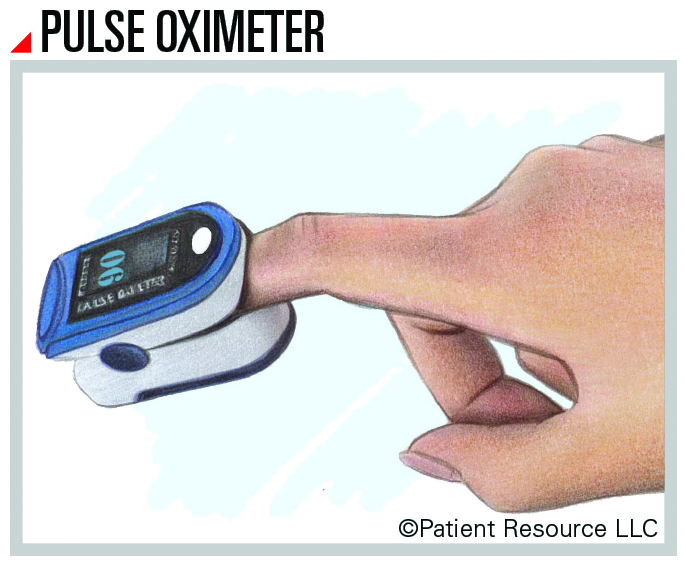
You are likely familiar with a pulse oximeter. It is often put on the tip of your finger during medical appointments to help monitor oxygen levels in your blood.
Your health care provider may suggest that you have this reusable, risk-free tool at home to track your results and share them with your health care team.
Simply turn the device on and attach it to the tip of your finger. Within seconds, a reading will appear.
Any of these factors can affect the reading:
- Fingernail polish or artificial nails
- Skin temperature (a skin temperature of about 91.4°F is recommended)
- Altitude
- Intravenous dyes
- Poor circulation
- Skin thickness
- Tobacco use
- Dark skin pigmentation
Typically, a low reading is not cause for alarm because your health care provider will make most treatment decisions after reviewing the readings over a period of time. However, if you have any of the following symptoms regardless of the reading, contact your doctor immediately:
- Bluish coloring in the face, lips or nails
- Shortness of breath, difficulty breathing or a cough that gets worse
- Restlessness and discomfort
- Chest pain or tightness
- Fast or racing heart rate
