

Skin Cancers
Supportive Care
Most cancer treatments have side effects. Fortunately, the advances that have been made in treatment strategies also include ways to prevent and minimize these. Supportive care services are now available to help you with both physical and emotional concerns. Talk with your doctor before treatment begins about any potential side effects and what you can expect.
Common Physical Side Effects
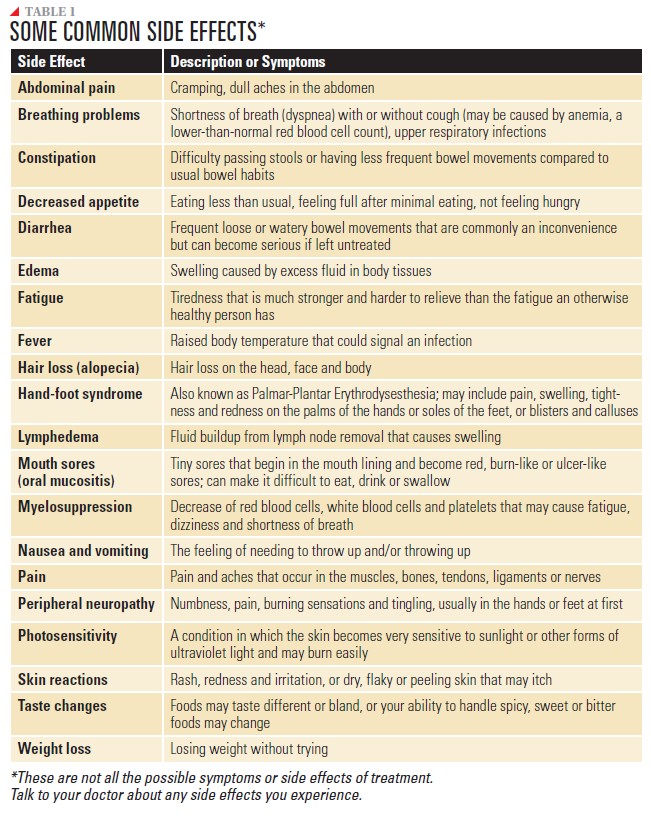
Some physical side effects can be really disruptive while others are more of an annoyance (see Table 1). Ask your doctor how to recognize symptoms, when they might occur and ways you can help manage them. It may comfort you to know that people often respond differently to the same treatments, so how someone else who has the same diagnosis and treatment reacted may not be how you react.
Potentially Severe Side Effects
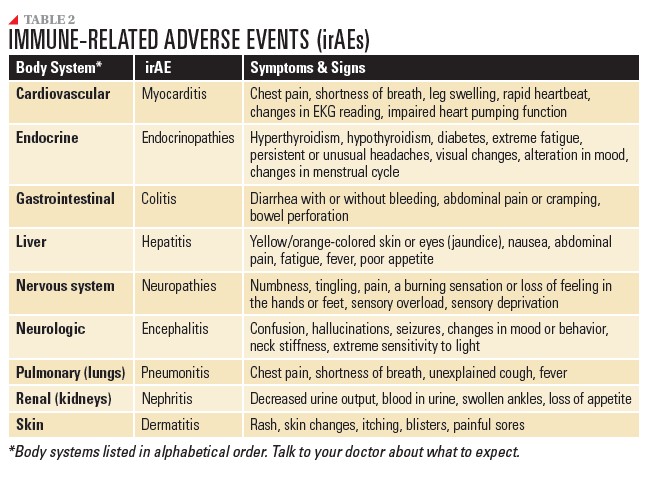
Some of the drug therapies in your treatment plan may be accompanied by side effects that can become serious and potentially life-threatening. Make sure you know whom to contact and how, especially after hours. Contact the appropriate person immediately if you experience any of the symptoms in Table 2. Prompt treatment is necessary to keep these symptoms from becoming fatal.
Not all potentially severe side effects are ones you can recognize. Some are identified only on lab work and imaging results, so it is crucial to stay on schedule with your follow-up appointments for monitoring.
Some potentially severe side effects include the following.
Immune-related adverse events (irAEs) are associated with certain immunotherapy drugs. They can occur if the immune system becomes overstimulated by treatment and causes inflammation in one or more organs or systems in the body. Some irAEs can develop rapidly, becoming severe and even life-threatening without swift medical attention.
Contact your medical team if symptoms arise between appointments, and remain alert to the possibility of irAEs for up to two years after completing immunotherapy.
Infection can occur as a result of surgery, a low white blood cell count (neutropenia/leukopenia) or other factors. Contact your doctor immediately – do not wait until the next day – if you have any of these symptoms: oral temperature over 100.4°F, chills or sweating; body aches, chills and fatigue with or without fever; coughing, shortness of breath or painful breathing; abdominal pain; sore throat; mouth sores; painful, swollen or reddened skin; pus or drainage from an open cut or sore; pain or burning during urination; pain or sores around the anus; or vaginal discharge or itching.
Infusion-related reactions most frequently occur with drug therapies, including immunotherapies that are given intravenously (IV) through a vein in your arm or through a port, usually soon after exposure to the drug. Reactions are generally mild, such as itching, rash or fever. Other symptoms, such as shaking, chills, low blood pressure, dizziness, throat tightness, skin rash or flushing, breathing difficulties and irregular heartbeat, can be serious or even fatal without rapid medical intervention.
Severe skin adverse reactions involve the skin and mucous membranes and may be life-threatening. Lesions and blisters that develop on the skin can cause tissue death. Serious damage to organs may occur. Prompt treatment is crucial.
Musculoskeletal adverse reactions can cause severe muscle spasms and joint pain.
Wound Healing
Surgery is a common treatment for skin cancer, and you may have to care for a wound at home.
Your wound may require stitches or staples or may be left open to heal by itself and fill in naturally. Wounds left open may require regular dressings to the area and can take a while to completely heal.
Some surgeries may require a skin graft or other types of surgery that rearrange the skin (known as a flap) to lessen scarring. A skin graft takes a patch of skin from elsewhere on your body and transplants it over the area where the cancer was removed. In some cases, you may need to consult a plastic surgeon to help regain an appearance similar to before your surgery.
Ask your doctor for aftercare instructions. Have your caregiver or someone else with you so you can both hear how to care for your skin after surgery, including what type of wound(s) to expect and what type of scar to expect, especially to areas of the head and face.paragraph
Managing Emotional Side Effects
Cancer can take a toll on more than your body. It also affects your well-being, self-confidence and overall mental health. Skin cancer can be especially distressing if treatment leaves visible scars on the head, face and neck. It is common to feel self-conscious about your appearance after surgery. Be aware that even with plastic surgery, your appearance may not look the same as before.
Many forms of support are available, both in person and online. Some organizations offer one-on-one buddy programs that pair you with another person who also has a form of skin cancer. Sharing your feelings with people who have been through something similar can be healing because they can relate to what you are going through. Skin cancer survivors can help you better understand your feelings and concerns and be a shoulder to lean on. Advocacy groups and national organizations are also available.
Regardless of where you find it, support is essential. Seek medical attention immediately if you feel depressed or hopeless for more than a few days or have thoughts of suicide.
